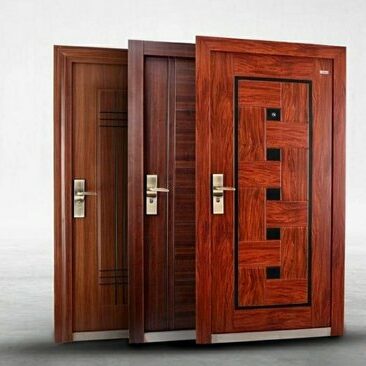

New Entrance Door, Same Cold Draft: Reading the Threshold, Sweep and Weatherstrip
door repair, door repair torontoThere is a particular kind of frustration that comes from paying for a new front door and still feeling a cold ribbon of air across your ankles in January. The door is new. The seals look new. And yet the draft is exactly where it always was.
In almost every case the door is not the problem. The perimeter is. Here is how to find out which part of it, in an order that does not involve guessing.
Where the air actually comes in
An entry door has four sealing surfaces, and they fail in very different ways.
- The head and the two jambs are sealed by compression weatherstrip set into the stop. It works only if the door closes tight enough to squash it.
- The bottom is sealed by a sweep on the door meeting a threshold on the floor. This is a moving joint that wears every single time the door opens.
- The hinge edge seals against the frame with almost no compression at all and relies on the door being hung square.
- The frame to wall joint is behind the casing. You cannot see it, and when it leaks it produces cold that feels like it comes from the door but actually comes from beside it.
Four surfaces, four different repairs. That is why a blanket answer like get a better door so rarely helps.
The paper test, done properly
Close a sheet of paper in the door and pull it out. Do this at eight points: top corner, middle and bottom corner on both the lock and hinge sides, plus two points along the head.
Where the paper slides out freely, the weatherstrip is not compressing. Where it tears or grips hard, compression is fine. What you are looking for is not a pass or fail but a pattern:
- Loose along the whole lock edge, tight on the hinge edge: the door is not being pulled in far enough. Usually a latch or strike adjustment, sometimes a multi-point lock that is not fully engaging.
- Loose at the top of the lock edge only: the slab has dropped on its hinges.
- Loose at the bottom only: threshold or sweep, covered below.
- Loose everywhere: the weatherstrip itself has hardened and lost its spring, which happens with age and is the easiest of all of these to fix.
The bottom of the door, which is where most drafts live
The sweep
The sweep is a flexible fin or bulb on the underside of the slab. It is the only seal on the door that drags across something every time you use it, and it wears out first. Signs it is done: visible daylight at the floor, a fin that has curled permanently to one side, a bulb that no longer springs back when squeezed, or a sweep that has torn at one corner and been quietly ignored for two winters.
The threshold
Most residential thresholds are adjustable. There are screws along the top, usually under small plugs, that raise or lower the cap. Over time these back off, or someone lowered the cap years ago to stop the door scraping and nobody ever raised it again. Raising the cap in small increments until the sweep just kisses it, and no more, is often the whole fix.
The limit of this adjustment is a floor that is not flat. On older Toronto houses with settled entries, a straight threshold under a straight door will simply have a wedge of air at one end. Packing or re-setting the threshold is real work, and it is the usual reason a draft complaint turns into a residential door repair visit rather than a parts swap.
The corners
Look where the sweep meets the jamb weatherstrip on each side. That junction is a known leak point, and on many installs it is simply a gap. Corner pads exist for this and are rarely fitted.
When it is the installation, not the door
This is the uncomfortable category, and it is more common than people expect on a door that is genuinely new.
A prehung door is only as square as the opening it was shimmed into. If the frame was fastened before it was made plumb, the slab will contact the weatherstrip unevenly no matter how good the hardware is. You can often see it: the reveal gap around the door is visibly wider at one end than the other.
The other common miss is insulation behind the casing. The cavity between the frame and the rough opening needs to be filled, and filled with the right material. Over-expanding foam bows the jamb inward and causes binding; nothing at all leaves an open channel straight to the outside. Pull a piece of interior casing and you will know within seconds which one you have. If the frame was never sealed properly, no amount of weatherstrip fixes it, and the honest answer is a correction at the door installation level.
How to locate a leak without instruments
On a cold, windy day, run the back of your hand slowly around the perimeter, about an inch away, with the heating on. Skin is very good at finding moving air. Work in the same order every time: threshold, lock jamb bottom to top, head, hinge jamb top to bottom, then the casing itself about two inches out from the frame.
If you feel cold along the casing rather than at the door edge, the leak is in the wall cavity, not the door. That single distinction saves a lot of money.
What is worth fixing and what is worth replacing
Worth fixing: hardened weatherstrip, a worn sweep, a dropped threshold, a strike that needs moving a few millimetres, loose hinge screws, unsealed frame cavity.
Worth replacing: a slab that has warped so the top corner stands proud of the frame, a frame that is rotted at the base, a steel door that has delaminated, or a unit that was installed so far out of square that correcting it means pulling it anyway. On those, patching the seals is spending money to postpone a decision, and it is where a Toronto entrance door replacement is the cheaper answer over any reasonable horizon.
Frequently asked
My door is only two years old. Can the weatherstrip already be gone?
The head and jamb strip usually outlasts that. The sweep frequently does not, especially on a door that gets heavy daily use or sits over an abrasive threshold.
Would a storm door solve it?
It will reduce the draft you feel, because it adds a still air layer. It does not fix the leak underneath, and it can trap heat against the main door in summer. Treat it as comfort, not as a repair.
Why is the draft worse on windy days?
Because wind pressurises one face of the house. A gap that leaks slowly in calm conditions becomes an active vent. Wind-dependent drafts usually point to a frame or wall cavity gap rather than a worn seal.
The door closes tight but the floor is still cold.
Cold floors near an entry are often the sill plate and the floor structure rather than the door. Check whether the cold band extends past the width of the doorway. If it does, the door is innocent.
Can I add weatherstrip on top of the existing strip?
You can, and it sometimes works, but the risk is a door that no longer latches without a shove. When that happens people stop closing it fully, which leaks more than the original gap.
In short
A new door that drafts is usually telling you about its opening, not about itself. Test the compression, adjust the threshold, look behind the casing. Most of the time the fix is measured in millimetres.